
Breaking Good: Focused Work Breaks Boost Productivity
Medium, November 4, 2022
By treating downtime like the sidelines of a sporting event, workers can more quickly get back up to speed.


By treating downtime like the sidelines of a sporting event, workers can more quickly get back up to speed.

Thirty-nine UCLA faculty members were named among world’s most influential researchers in the sciences and social sciences today.

The man arrested in Atlanta after authorities say he was found to have a box cutter on board a plane that departed from the Cincinnati/Northern Kentucky International Airport on Friday evening has made his first court appearance.

After a tumultuous summer of air travel delays and cancellations, fall air travel has been remarkably placid. Face mask mandates have long ended, and the two most active hurricane season months brought just one major storm, Hurricane Ian, to the continental United States, as well as a late-season Category 1 storm, Hurricane Nicole. This has mostly kept the airlines under the radar for problems and issues that directly impact travelers.

Conventional wisdom is often wrong on holiday travel, so pay attention next week, America. As any frequent traveler will say, just about any trip via air, rail, boat, or even car is a risky proposition, especially at a time like Thanksgiving when millions of Americans will be heading home – or away from home – for the holidays.
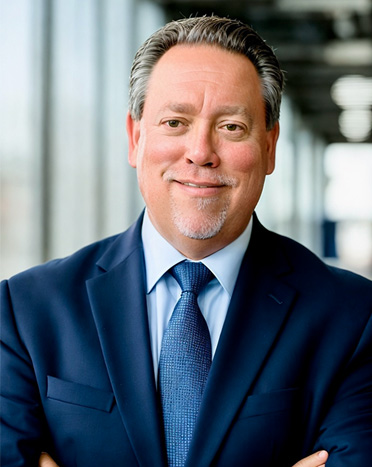
Jeff Cohen
Chief Strategy Officer
INFORMS
Catonsville, MD
[email protected]
443-757-3565
An audio journey of how data and analytics save lives, save money and solve problems.

With seemingly no limit to the demand for artificial intelligence, everyone in the energy, AI, and climate fields is justifiably worried. Will there be enough clean electricity to power AI and enough water to cool the data centers that support this technology? These are important questions with serious implications for communities, the economy, and the environment.

It’s college graduation season, which means over 4 million seniors will graduate in the next few weeks, flooding the job market with new candidates. One area that has shown high potential for the right candidates is artificial intelligence and machine learning. Both disciplines are part of the larger data and analytics career path.

Drugs being explicitly developed to treat rare diseases are getting more expensive.

Robert F. Kennedy Jr., as the new secretary of Health and Human Services, is the nation’s de facto healthcare czar. He will have influence over numerous highly visible agencies, including the Centers for Disease Control and Prevention, the National Institutes of Health and the Food and Drug Administration, among others. Given that healthcare is something that touches everyone’s life, his footprint of influence will be expansive.

The recent US-China agreement to temporarily reduce tariffs is a major step for global trade, with tariffs on US goods entering China dropping from 125% to 10% and on Chinese goods entering the US decreasing from 145% to 30% starting May 14. While this has boosted markets and created optimism, key industries like autos and steel remain affected, leaving businesses waiting for clearer long-term trade policies.

With sweeping new tariffs on Chinese-made products set to take effect this summer, Americans are being urged to prepare for price hikes on everyday goods. President Donald Trump's reinstated trade policies are expected to affect a wide swath of consumer imports, including electronics, furniture, appliances, and baby gear. Retail experts are advising shoppers to act before the tariffs hit and prices rise.

Twenty years ago, few people would have been able to imagine the energy landscape of today. In 2005, US oil production, after a long decline, had fallen to its lowest levels in decades, and few experts thought that would change.

In the case of upgrading electrical and broadband infrastructure, new analysis from the University of Massachusetts Amherst reveals {that a} “dig once” strategy is almost 40% more economical than changing them individually.