News Room

A collection of press releases, audio content and media clips featuring INFORMS members and their research.

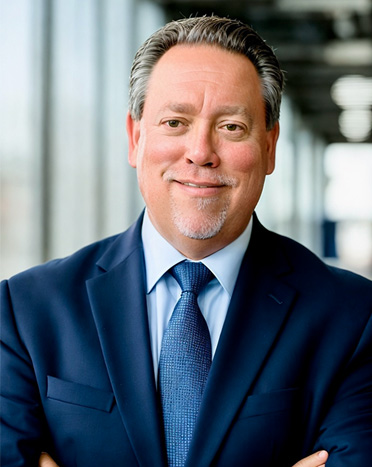
On the left side of the graphic is a caucasian man wearing glasses and a suit. The photo shows him in portrait mode. The right side is blue and has a white logo and text.
News Release

Announcing the results of the 2026 INFORMS Board of Directors election and the new board for 2027.

Read More
A logo on white background
News Release

INFORMS has named 12 distinguished leaders as the 2026 class of INFORMS Fellows, one of the highest honors in the profession.

Read More
A human hand holds a magnifying glass up to a computer screen. The screen is out of focus but the area under the magnifying glass is crystal clear. It appears to be the website for the FDA.
News Release

Most medical devices do not hit the market through rigorous safety testing but by being deemed similar enough to something already approved—the “predicate” device through a mechanism known as the FDA’s 510(k) pathway. But similar is not a synonym for safe. While the assumption may be that substantial equivalence is a reasonable stand-in for a safety review, a share of devices cleared with this method still get recalled, and the FDA spends valuable time reviewing devices the same way, regardless of how risky it is on paper.

Read More

Resoundingly Human Podcast

An audio journey of how data and analytics save lives, save money and solve problems.

Media Contact

Jeff Cohen
Chief Strategy Officer
INFORMS
Catonsville, MD
[email protected]
443-757-3565

INFORMS in the News

What are you looking for?

Type of Content
Topic
A man adjusts a pair of headphones over his ears. He appears to be working on the laptop open in front of him.

Stop managing your time. Instead, manage your energy

Fast Company, September 2, 2026

Workers get only about 85 minutes of undisturbed focus a day, and constant task-switching and growing workloads drain the energy creative work needs, writes Diana Shi in Fast Company. The piece argues for managing energy rather than time. Its tips include blocking meeting-free days and silencing notifications, doing solo ideation before group brainstorming (an approach backed by Carnegie Mellon professor Anita Williams Woolley's research on creative "bursts"), and scheduling demanding work for peak hours based on your chronotype, leaving administrative tasks for natural energy dips.

A woman stands in the middle of the frame, leaning over a desk with her right index finger pointing to a piece of paper on the desk. A younger woman sitting behind a computer rests her chin on her hand and looks down at the piece of paper

Are You Hiring for Skills AI Already Has? Mapping the Skill Frontier of AI

Forbes, September 14, 2026

MSU's Anjana Susarla looks at a new benchmark from researchers at Penn, Carnegie Mellon and Harvard that tested frontier AI models on 238 real MBA case studies across 18 disciplines, graded with instructors' own rubrics. Under partial-credit scoring, top models topped 87%, but when every rubric item had to be hit, even the best model fully completed fewer than half the questions. The models were strong on structured, quantitative tasks and weak on open-ended advisory judgment. Drawing on interviews with coauthors Kartik Hosanagar of Wharton and Ramayya Krishnan of CMU's Heinz College, Susarla argues that the scarce skill is moving from producing analysis to verifying it. That shift calls for new apprenticeship models that teach entry-level workers verification and supervision skills earlier.

A view from the ground looking upward of a large ship with many colorful shipping containers at dusk or in the morning. A giant blue metal contraption rests on the land to the left of the composition.

Imports boomed this summer in anticipation of higher costs

Marketplace, September 15, 2026

Despite trade wars and inflation, America has been importing a lot of stuff. The nation as a whole just logged its third-highest month for container imports, which are commercial items — like what consumers buy on Amazon. One big reason behind this boom is that the economy is still pretty strong. Another reason: the economy is really uncertain, partly because the war in the Middle East keeps dragging on and dragging oil prices up. Importers are also also wary of ever-changing tariffs.

A view of the western portion of the national Mall of Washington, D.C., stretching from the Lincoln Memorial to the Washington monument

Nonfederal Capabilities for Risk Management

The Regulatory Review, September 18, 2026

With many federal agencies having incurred drastic cuts, the United States will enter a period of radical experimentation over what can be done with nonfederal capabilities for risk management. That will be the case until the advent of a more friendly presidential administration in 2029—or even after that, due to reduced trust in elites and a more populist approach to politics, as noted by Rob Goble in another essay in this series. Moreover, some previous federal risk-management functions may be difficult or costly to restore due to the loss of institutional memory, obsolete or corrupted databases, or simply the fact that repair is usually more expensive than maintenance. In any event, some previous federal functions had already been overly costly, slow, and burdensome. Such functions may be unnecessary or could be performed better and more successfully elsewhere.

A robotic hand descends into the frame from the upper right. With its index finger, it touches the top of a set of scales.

AI execs call for regulations but policy has been slow to move

Detroit Free Press, September 18, 2026

Even as tech executives warn of potentially catastrophic outcomes if AI development goes unchecked, AI regulation has largely stalled, both in Washington and in Lansing. Without a clear federal standard, it's uncertain whether companies will follow through on their own calls to slow development. States have been filling the gap with a patchwork of rules: in 2025 every state saw AI proposals introduced and 38 enacted some form of regulation, per the National Conference of State Legislatures. Michigan currently bans AI-generated nonconsensual sexual deepfakes and requires campaigns to disclose AI use in certain materials, but many other AI bills haven't advanced in the Legislature. MSU's Anjana Susarla is quoted on the state-by-state patchwork.

Subject Matter Experts in

Supply Chain

View list of experts

Subject Matter Experts in

Healthcare

View list of experts

INFORMS Magazines

OR/MS Today is the INFORMS member magazine that shares the latest research and best practices in operations research, analytics and the management sciences.

Access OR/MS Today Magazine

Analytics magazine showcases articles and research reports based on big data, AI, machine learning, data analytics and other new-age technologies.

Access Analytics Magazine